What Rocky Mountain House acreage buyers should notice beyond the front doorWhen buyers tour an acreage, the house naturally gets most of the attention. They picture furniture in the living room,
Dated: September 9 2026
Views: 28
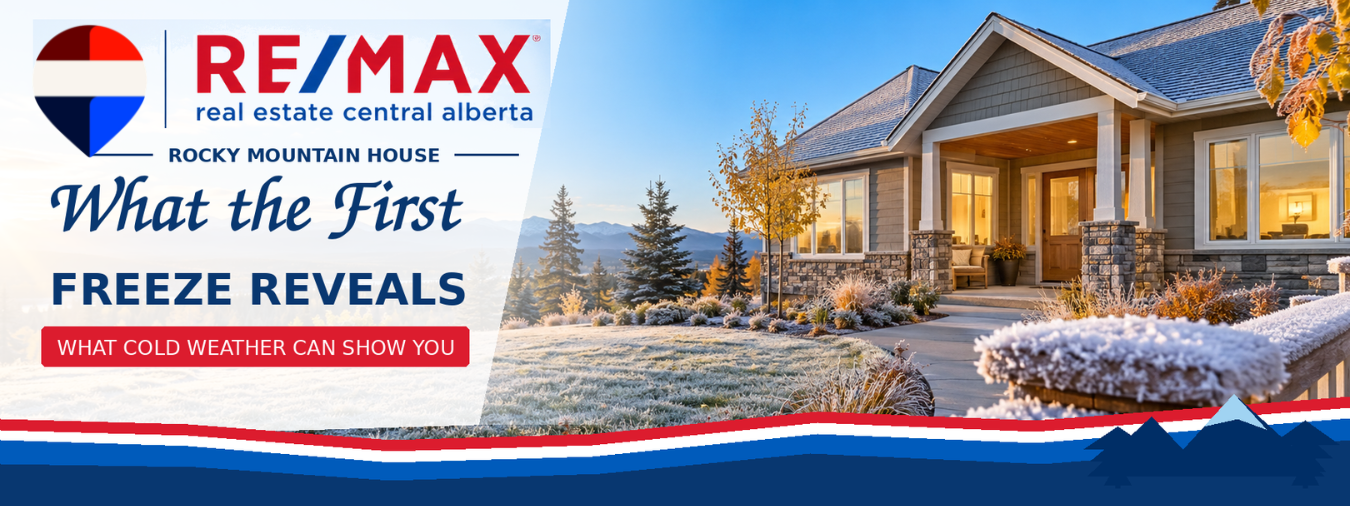
A colder morning can expose details buyers miss in mild weather
Most buyers hope for a bright, comfortable day when they tour a home. In Rocky Mountain House, however, one of the most useful showings can happen on a morning when the temperature has dropped below zero. The first freeze places a home under a different kind of pressure. Windows, doors, heating systems, drainage, exterior surfaces, and shaded areas may all behave differently than they did a few weeks earlier. A cold showing is not a reason to expect problems. It is an opportunity to gather information that mild weather can hide.
Pause before you step inside. Is the walkway dry and even, or has water frozen near the entrance? Do the steps feel secure? Does the door open smoothly, close firmly, and seal without a noticeable draft? Frost collecting along one edge of a door or window may be a clue that warm indoor air is escaping. A single sign does not tell the whole story, but it gives you a useful question to ask. Also look at the driveway. Shaded slopes and low areas can become icy sooner than the rest of the property. Think about school mornings, work vehicles, deliveries, visitors, and snow removal. Safe access matters just as much as curb appeal once winter settles in.
Cold glass makes condensation easier to notice. A small amount of moisture can be caused by everyday humidity, but persistent fogging between panes may indicate a failed seal. Water collecting on frames or sills deserves attention because repeated moisture can damage finishes over time. Stand near larger windows for a moment. Feel for a strong temperature difference or moving air without pressing your hand directly against the glass. Ask about the age of the windows, any recent replacements, and whether the owners use a humidifier during winter. The goal is not to reject a home because one window needs attention. It is to understand comfort, maintenance, and future costs before you make a decision.
A cold day gives the furnace a chance to operate during your visit. Notice whether heat reaches the rooms evenly and whether any areas feel much colder than the rest of the home. Listen for unusual rattling, banging, or repeated starts and stops. Check that supply vents are open and not blocked by furniture. Ask about the age and service history of the furnace, the filter routine, and any supplemental heat sources. In homes with a fireplace, wood stove, or garage heater, find out how often it is used and what maintenance records are available. A qualified inspection remains important, but the showing can help you identify where more detailed questions are needed.
Frost can highlight roof lines, insulation differences, and areas where warm air may be escaping. Uneven melting does not automatically mean there is a defect because sun exposure and roof design also affect it. Still, it can be worth asking why one section looks different from another. Check the gutters and downspouts for damage, blockages, or discharge points that send water toward walkways or the foundation. Then look at the ground. Low spots, frozen puddles, and staining near exterior walls may offer clues about drainage. Rocky Mountain House weather can move quickly from freeze to thaw, so water needs a clear path away from the home.
The north side of a property and areas beside fences, trees, decks, or outbuildings often remain colder. These spots may reveal moss, moisture, packed snow, or ice that is not visible elsewhere. Check exterior taps, railings, decks, garage thresholds, and any path you would use regularly. If the property includes a detached garage or shed, step inside and notice moisture, odours, frost around doors, and how well the building closes. Buyers often focus on the main living areas, but winter convenience depends on the entire property working together.
A first freeze showing can make a property feel less picture perfect, and that can be helpful. You are seeing how the home responds when conditions become more demanding. Take notes, ask direct questions, and use a home inspection to investigate anything that concerns you. The right property does not need to be flawless. It needs to be understood. RE/MAX real estate central alberta Rocky Mountain House can help you compare homes with local perspective and focus on the details that matter through a Central Alberta winter.

Rose Reis - Marketing Specialist | Real Estate & BoldTrail Assistant With nine years of experience in both digital and traditional marketing, I specialize in helping real estate agents streamline the....
What Rocky Mountain House acreage buyers should notice beyond the front doorWhen buyers tour an acreage, the house naturally gets most of the attention. They picture furniture in the living room,
A colder morning can expose details buyers miss in mild weatherMost buyers hope for a bright, comfortable day when they tour a home. In Rocky Mountain House, however, one of the most useful showings
The space, privacy and connection to the outdoors are a big part of acreage living around Rocky Mountain House. But buying a rural property involves more than choosing a home and admiring the view.
Finding a Rocky Mountain House Property That Fits Your Real LifeA Home Has to Support More Than the Way You Live IndoorsFor many buyers in and around Rocky Mountain House, the wish list does not
 Data is supplied by Pillar 9™ MLS® System. Pillar 9™ is the owner of the copyright in its MLS® System. Data is deemed reliable but is not guaranteed accurate by Pillar 9™. The trademarks MLS®, Multiple Listing Service® and the associated logos are owned by The Canadian Real Estate Association (CREA) and identify the quality of services provided by real estate professionals who are members of CREA. Used under license.
Last Update: September 12, 2026 6:57 PM UT
C
Show More...
Data is supplied by Pillar 9™ MLS® System. Pillar 9™ is the owner of the copyright in its MLS® System. Data is deemed reliable but is not guaranteed accurate by Pillar 9™. The trademarks MLS®, Multiple Listing Service® and the associated logos are owned by The Canadian Real Estate Association (CREA) and identify the quality of services provided by real estate professionals who are members of CREA. Used under license.
Last Update: September 12, 2026 6:57 PM UT
C
Show More...
 All information deemed reliable but not guaranteed. All properties are subject to prior sale, change or withdrawal. Neither listing broker(s) or information provider(s) shall be responsible for any typographical errors, misinformation, misprints and shall be held totally harmless. Listing(s) information is provided for consumer's personal, non-commercial use and may not be used for any purpose other than to identify prospective properties consumers may be interested in purchasing. The data relating
to real estate for sale on this website comes in part from the Internet Data Exchange program of the Multiple Listing Service. Real estate listings held by brokerage firms other than REMAX Real Estate Central Alberta - RMH may be marked with the Internet Data Exchange logo and detailed information about those properties will include the name of the listing broker(s) when required by the MLS. Copyright ©2026 All rights reserved.
Last Updated: September 12, 2026 4:36 PM UTC
Show More...
All information deemed reliable but not guaranteed. All properties are subject to prior sale, change or withdrawal. Neither listing broker(s) or information provider(s) shall be responsible for any typographical errors, misinformation, misprints and shall be held totally harmless. Listing(s) information is provided for consumer's personal, non-commercial use and may not be used for any purpose other than to identify prospective properties consumers may be interested in purchasing. The data relating
to real estate for sale on this website comes in part from the Internet Data Exchange program of the Multiple Listing Service. Real estate listings held by brokerage firms other than REMAX Real Estate Central Alberta - RMH may be marked with the Internet Data Exchange logo and detailed information about those properties will include the name of the listing broker(s) when required by the MLS. Copyright ©2026 All rights reserved.
Last Updated: September 12, 2026 4:36 PM UTC
Show More...